


Hosting a website is essential for establishing an online presence, but many people are unsure how to do it.
While you don’t need to understand all the technical details, most businesses rely on web hosting service providers to host their websites online.
Hold on! Are you curious about web hosting service providers before understanding what they do and how?
Let’s first look at what web hosting service providers do and how they operate.
What Web Hosting Service Providers Do and How They Operate
Web hosting service providers are the unsung heroes of the digital landscape, enabling businesses, organizations, and individuals to establish a visible and reliable online presence.
With their essential services and expertise, web hosting providers ensure a seamless and secure web experience for users worldwide.
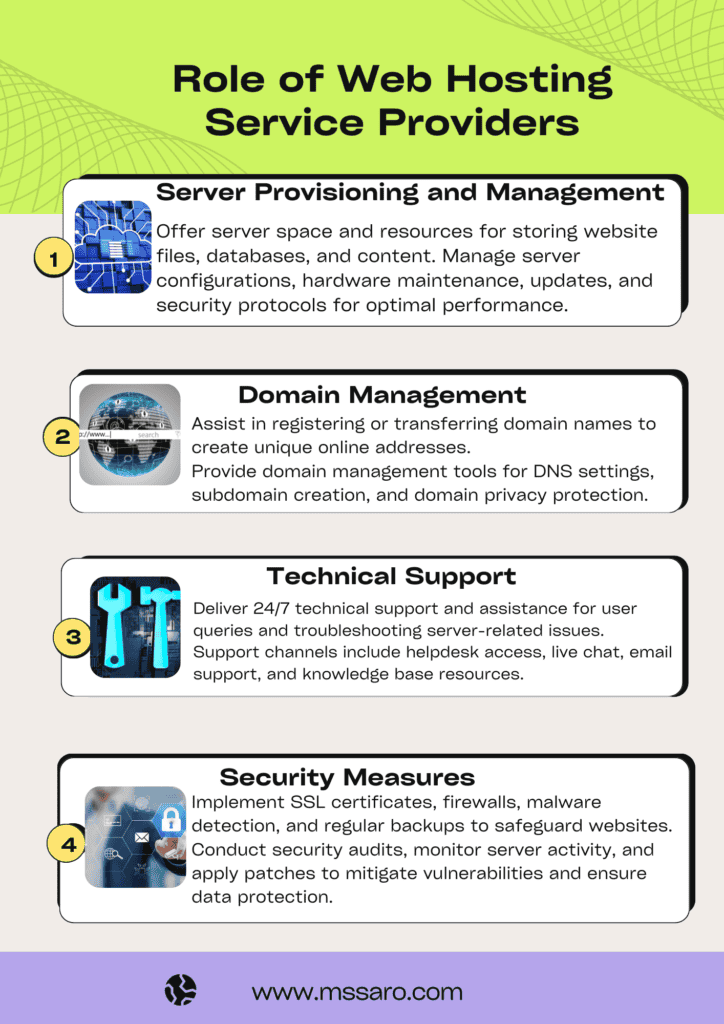
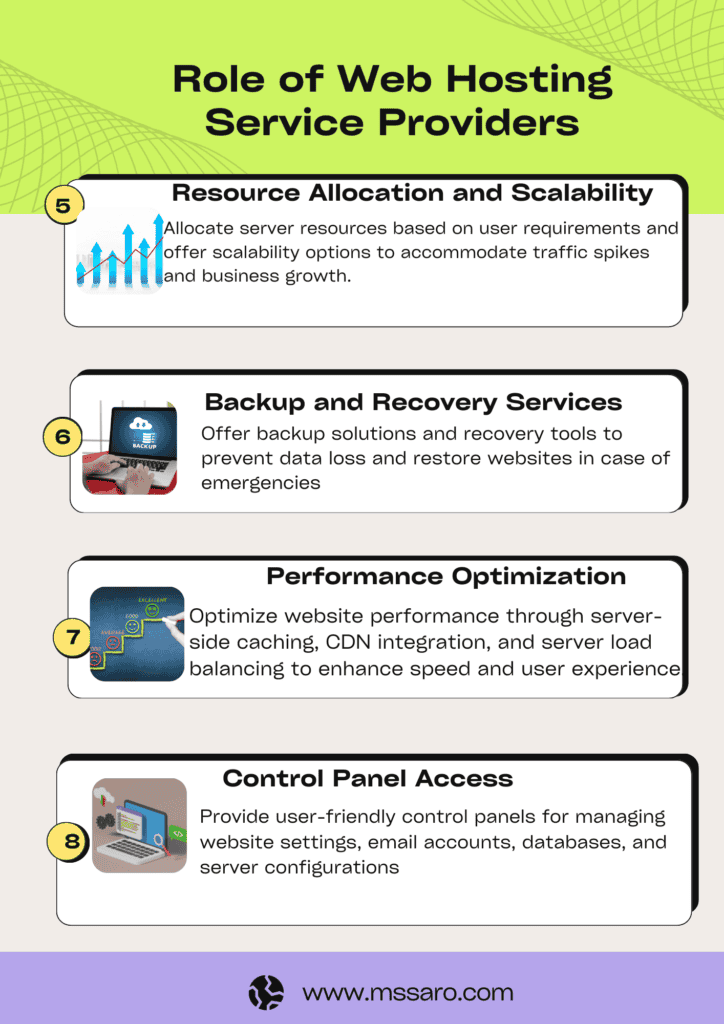
Let’s examine the role of service providers through infographics.
Infographics: Role of Web Hosting Service Providers
What Does it Mean to Host a Website?
Website hosting is essential to website management, and understanding how it works can help you make informed decisions that enhance your website’s performance and reliability.
Let’s start with the basics, i.e., what is website hosting?
What is Website Hosting?
Website hosting refers to renting server space where your website’s files and data are stored and accessed by visitors via the Internet.
A hosting provider ensures your website is available, secure, and protected from cyber threats.
The Mechanics of Hosting
Web hosting providers operate large, powerful computers called servers.
These servers are designed to store and deliver website content to users’ browsers upon request.
These servers have high-speed internet connections, ensuring rapid data transmission for seamless website access.
Several types of website hosting are available, including shared hosting, VPS hosting, dedicated hosting, and cloud hosting.
Choosing a reliable hosting provider is essential for your website’s success. A reliable hosting provider ensures that your website runs fast, loads quickly, is always available, and remains secure.
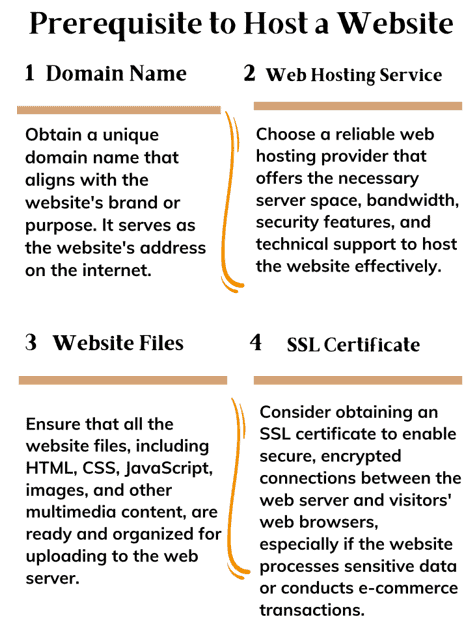
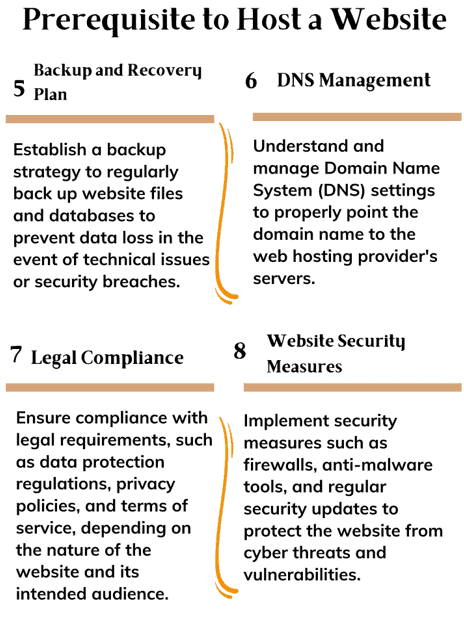
What are the Prerequisites for Hosting a website?
Are you ready to launch your website but unsure about the prerequisites for hosting it? Shared hosting is a popular and cost-effective option for hosting sites, especially for beginners and small businesses.
Let’s see its prerequisite.
Steps to Host a Website
Are you ready to take your website live but unsure about the steps involved in hosting it?
We’ll break down the key steps to host a website, from selecting a hosting provider to configuring your website for optimal performance.
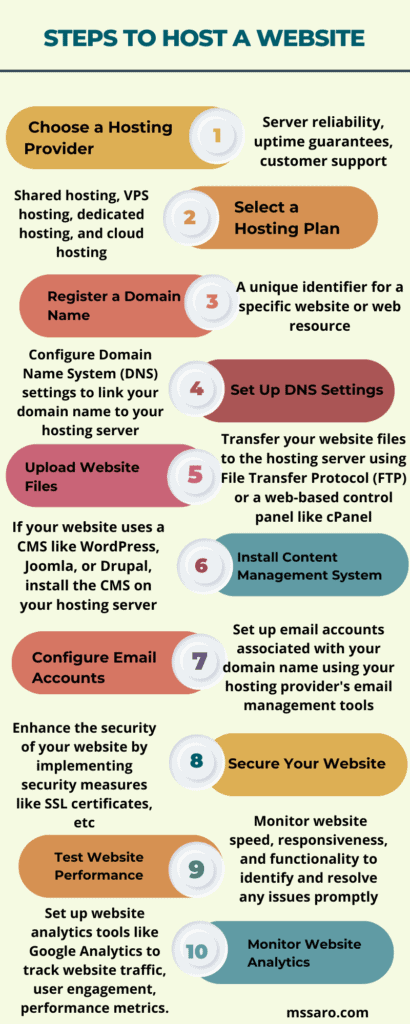
Let’s look at it in detail to understand it better.
1. Decide and Select Your Website Niche
Choosing the right niche is critical in developing a successful online presence. Let’s explore the key points to consider when deciding and selecting your website niche. Let’s see it in the form of infographics.
Infographics: How to Decide and Select Niche

By following these key points and conducting thorough research and analysis, you can confidently select a niche that aligns with your expertise, resonates with your target audience, and sets your website up for long-term success in the online landscape.
2. Decide Domain Name
When embarking on the journey of creating a website, one of the crucial steps is deciding on a domain name.
Your domain name is an address for your online presence and represents your brand identity.
Let’s see how to choose a domain name with the help of infographics:
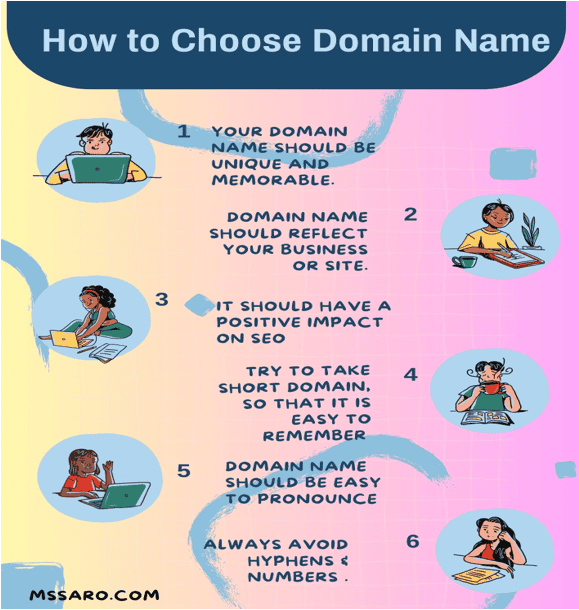
By focusing on these critical points and conducting thorough research and validation, you can confidently decide on a domain name that represents your brand effectively and contributes to the success and visibility of your online presence.
3. Choose the Right Web Hosting Services as per your Requirement
Selecting the exemplary web hosting service is one of the most important decisions when setting up a website. Let’s explore the key points to consider when choosing a web hosting service from the below infographics.
Infographics on Choose the Right Webhosting
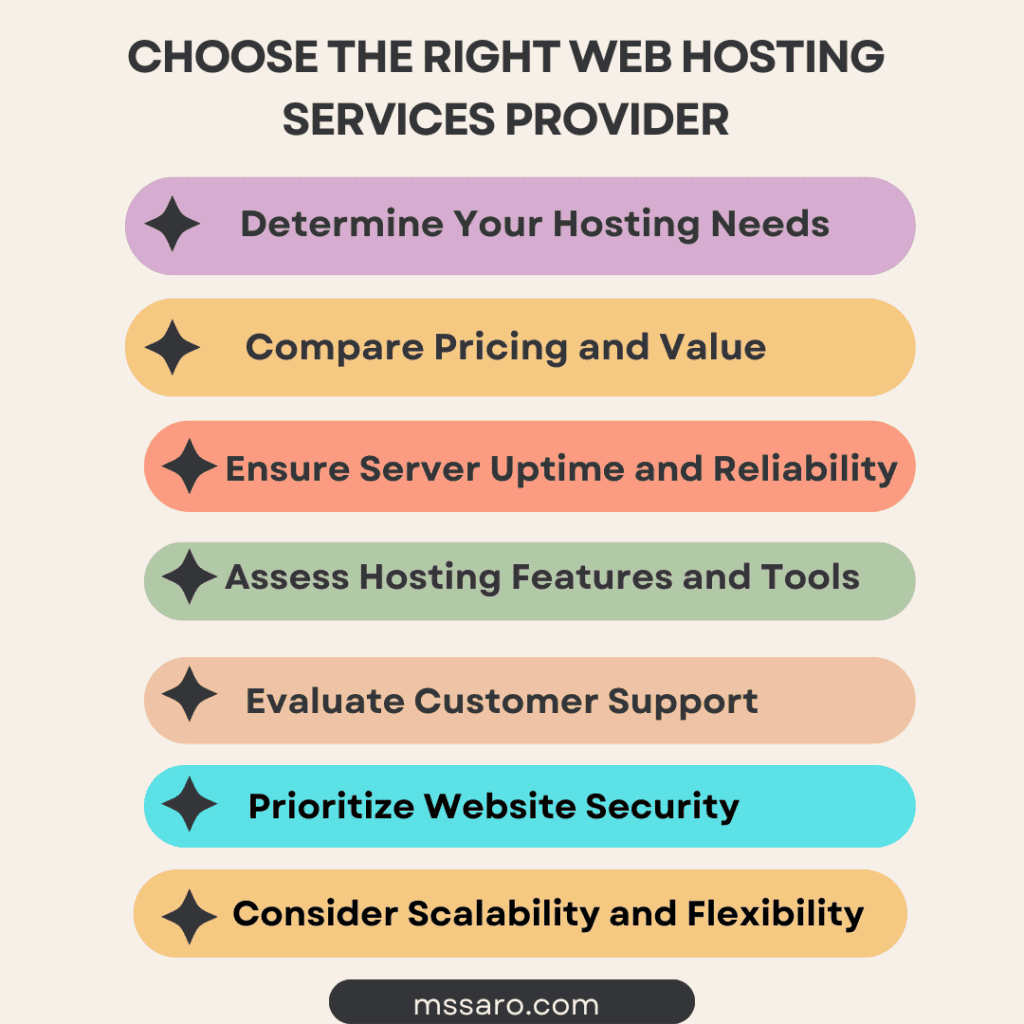
By conducting thorough research, assessing your website needs, and considering these key points, you can select the web hosting service that meets your requirements, enhances your website performance and security, and delivers a great user experience to your visitors.
Types of Website Hosting Services
When setting up a website, choosing the exemplary hosting service is a crucial decision that can significantly impact your online presence’s performance, security, and scalability.
Shared Hosting: Shared hosting is a popular and budget-friendly option in which multiple websites are hosted on a single server and share their resources.
It is suitable for small—to medium-sized websites with moderate traffic and provides an affordable entry point for individuals and small businesses launching their online presence.
VPS (Virtual Private Server) Hosting: VPS hosting offers a middle ground between shared and dedicated hosting.
It provides a virtual server with dedicated resources and offers more control, flexibility, and scalability than shared hosting.
It is ideal for websites that require more resources, customization, and performance optimization.
Dedicated Hosting: Dedicated hosting provides an entire physical server exclusively for one website, offering complete control over server resources, configurations, and security settings.
It is best suited for large-scale websites, high-traffic e-commerce platforms, or applications that demand robust performance, security, and customization options.
Cloud Hosting: Cloud hosting utilizes a network of virtual servers, allowing resources to be dynamically distributed and scaled as needed.
It offers high reliability, scalability, and redundancy, making it suitable for websites with fluctuating traffic, high availability requirements, or those seeking enhanced resilience against downtime and hardware failures.
Managed WordPress Hosting: Managed WordPress hosting is designed specifically for WordPress websites. It offers specialized infrastructure, performance optimizations, automatic updates, security enhancements, and expert support tailored to the WordPress platform. It is an excellent choice for WordPress users seeking hassle-free maintenance and superior performance.
Considerations for E-commerce Hosting: Specialized hosting options such as WooCommerce hosting, Magento hosting, or Shopify hosting should be considered for e-commerce websites.
These hosting solutions are optimized for online stores and provide features like PCI compliance, secure payment gateways, and advanced e-commerce functionalities.
Scalability and Performance: When choosing a hosting type, consider your website’s scalability and performance needs.
Assess your anticipated traffic, resource requirements, and future growth projections to select a hosting service that accommodates your evolving needs without compromising website performance.
Security and Reliability: Evaluate the security measures, reliability, and uptime guarantees provided by different hosting services.
Choose a hosting type with robust security features, regular backups, and measures to safeguard your website against potential threats and downtime.
Best Webhosting Service Providers (Shared Webhosting)
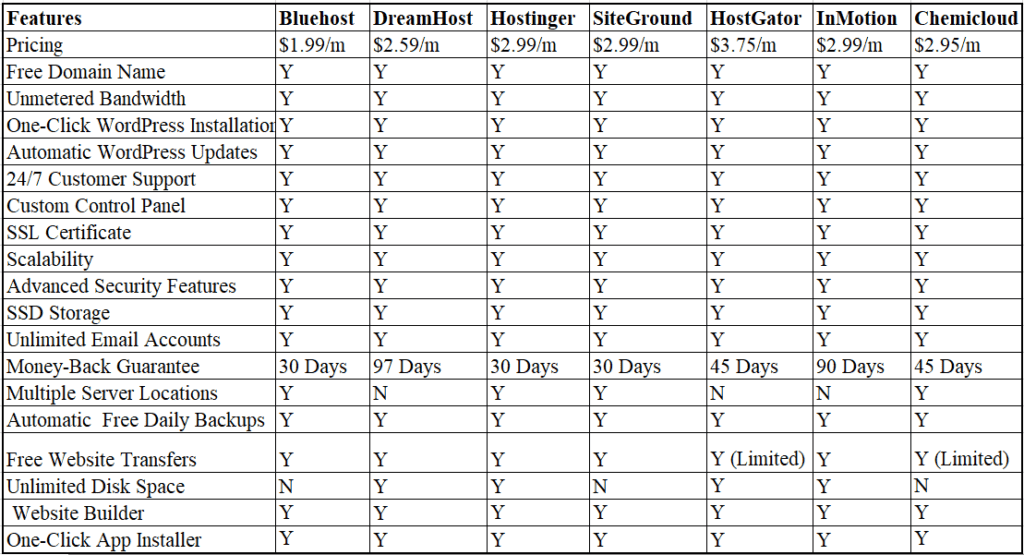
By analyzing the above features, you will decide the best service provider based on your requirements.
Conclusion
Congratulations on deciding to host your website and establish an online presence.
Whether launching a personal blog, a small business website, or an enterprise application, choosing the right hosting plan is crucial for success.
Here are some of the key points to keep in mind when hosting your website:
- Evaluate Your Website Needs: Assess your website’s requirements, including traffic volume, storage needs, bandwidth requirements, and technical specifications.
- Compare Hosting Options: Research and compare different hosting options, including shared hosting, VPS hosting, dedicated hosting, cloud hosting, and managed WordPress hosting.
- Understand Key Features: Familiarize yourself with the key features of web hosting plans, such as disk space, bandwidth, uptime guarantees, server resources, email hosting, SSL certificates, backup options, and scalability.
- Consider Performance and Uptime: Choose a hosting provider with high server performance, fast loading speeds, and reliable uptime guarantees.
- Evaluate Customer Support: Opt for a provider that offers 24/7 customer support via multiple channels to troubleshoot issues and resolve technical concerns promptly.
- Security and Data Protection: Ensure that your hosting provider follows best practices for data protection to safeguard your website and visitors’ sensitive information from potential security threats.
- Plan for Future Growth: Anticipate your website’s growth trajectory, selecting a hosting provider that allows for easy scalability and resource upgrades as your website expands.
Hosting your website can seem overwhelming, but by following these key points, you can make an informed decision about your hosting provider. Choose wisely, and happy hosting!
Frequently Asked Questions (FAQs) on How to Host a Website
A. Web hosting is a service that allows individuals or organizations to make their websites accessible on the Internet. Web hosting providers store your website’s files on servers, making it accessible to users worldwide
A. While some technical knowledge can be helpful, many web hosting providers offer user-friendly interfaces and customer support to assist with the hosting process. You can also opt for managed hosting services, in which the provider handles technical aspects.
A. The main types of web hosting include shared hosting, virtual private server (VPS) hosting, dedicated hosting, cloud hosting, and managed WordPress hosting. Each type offers different levels of resources, control, and scalability.
A. When choosing a web hosting plan, consider your website’s needs (e.g., traffic volume, storage requirements), budget, technical requirements, performance, security features, customer support quality, and scalability.
A. Key features in a web hosting plan include disk space, bandwidth, uptime guarantees, server resources, control panels, email hosting, SSL certificates, backup options, and scalability options.
A. Uptime refers to how long your website is accessible and operational to users. Opt for a hosting provider with a high uptime guarantee to ensure your website is always available to visitors.
A. most hosting providers offer scalability options that allow you to upgrade your hosting plan to accommodate increased traffic, storage needs, and other resources as your website expands.
A. Most hosting providers offer migration services to help you transfer your website files, databases, and settings to their platform. Alternatively, you can manually migrate your website following hosting provider guidelines or seek professional assistance.